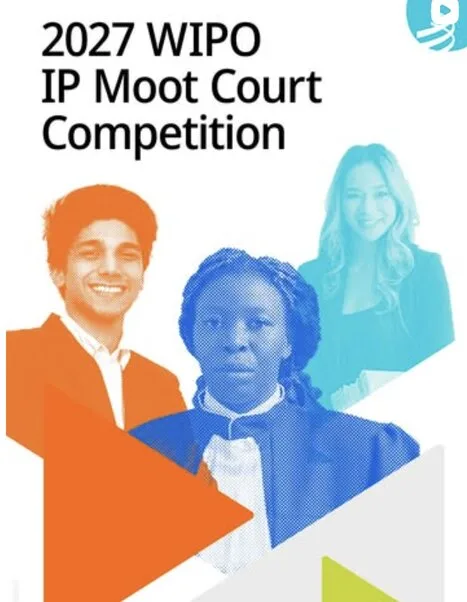
World Intellectual Property Organization (WIPO) Intellectual Property Moot Court Competition 2027
Brief Description
The
World Intellectual Property Organization (WIPO) invites
law students worldwide to take part in the
2027 WIPO Intellectual Property Moot Court Competition. This simulated court experience lets you address cutting-edge IP law issues arising from a hypothetical case involving live streaming, intellectual property rights, and online enforcement. Designed for university teams, the program offers a unique chance to sharpen your written and oral advocacy, critical analysis, and legal reasoning before a panel of international experts. If your team advances through the selection stages, you will compete in the
in-person finals at WIPO Headquarters in Geneva, Switzerland, with travel, accommodation, and visa costs fully covered by the organizing body.
Name of Host Institution
World Intellectual Property Organization (WIPO)
Requirements/Eligibility Criteria
- Open to university teams of law students aged 35 and under.
- Up to two teams from the same university may apply, and each application is evaluated independently.
- Teams must successfully navigate a competitive video application process to be selected.
- Participants must be prepared to tackle complex IP law issues through written submissions and oral arguments.
Deadline
Applications close on
November 6, 2026.
Apply Now
💡 Quick FAQ & IntelligenceTap to Expand
Q: Who is eligible to apply for the WIPO Moot Court Competition?
The competition is open to university teams of law students aged 35 and under.
Q: What expenses does WIPO cover for finalist teams?
WIPO provides full funding for the eight teams that qualify for the final rounds in Geneva, Switzerland, covering the cost of travel, accommodation, and visa fees. Note that team coaches are not funded by WIPO.
Q: What subject matter does the 2027 competition focus on?
The 2027 moot problem explores the fast-evolving world of live streaming, focusing specifically on where innovation, intellectual property rights, and online enforcement intersect.





No responses yet