
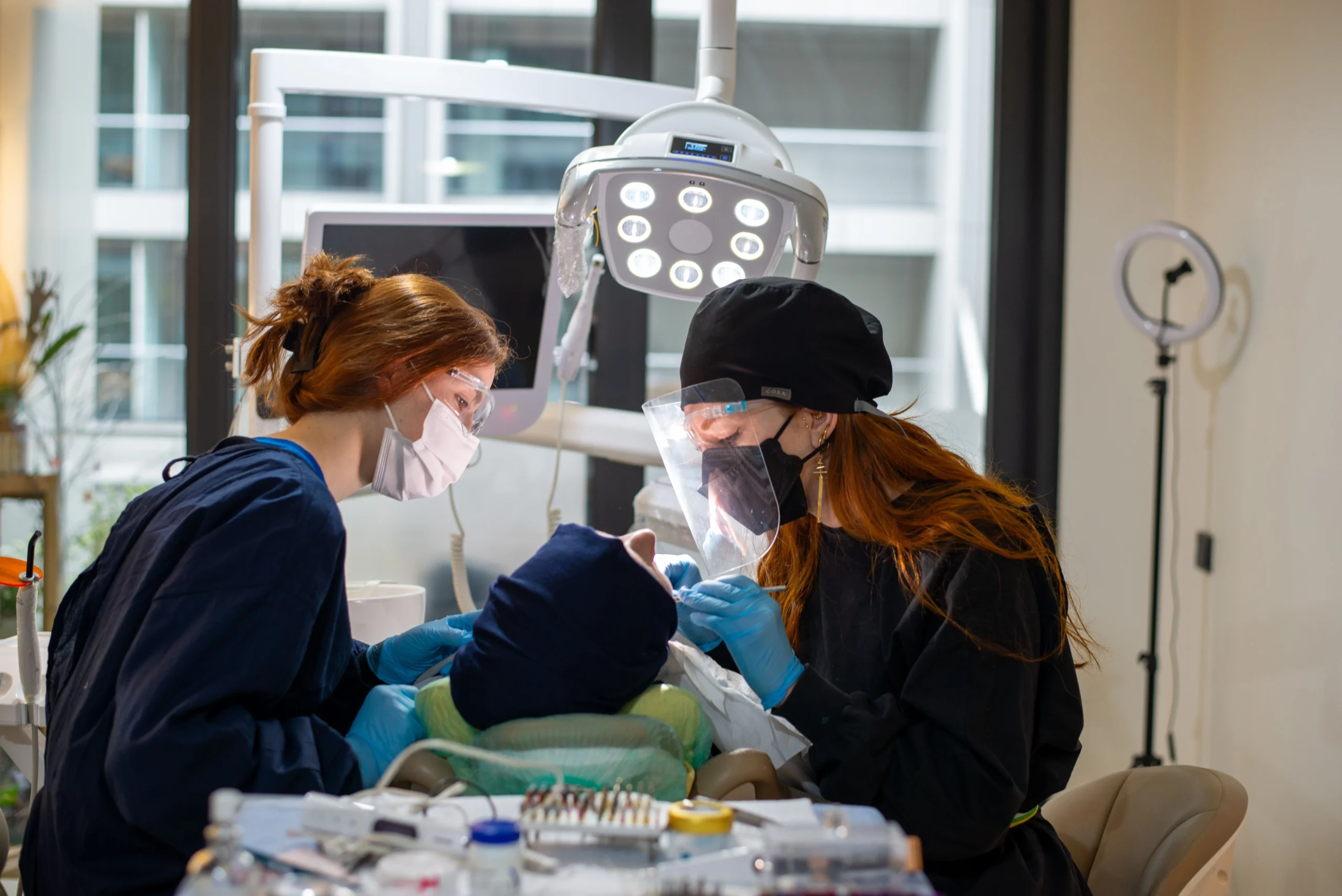
Getting a dental degree comes with a massive financial footprint. In the US, first-year expenses hit US$46,845 for residents and US$79,168 for non-residents during the 2025, 26 academic term, while private institutions average US$90,090 for that opening year alone.
Escaping that debt mountain is possible by looking abroad. Tuition varies wildly depending on your nationality and the specific university, but options spanning Europe, Asia, and the Americas offer starkly lower price tags. Before signing up anywhere, always verify whether your chosen qualification will be legally recognised back home.
📌 Read More
Here are the 13 countries offering more affordable paths to a dental career.
1. Brazil
At the University of São Paulo, undergraduate dentistry is free for most students. It’s an unbeatable entry point if you can navigate the language and admissions process, saving you tens of thousands compared to domestic alternatives.2. Japan
Institute of Science Tokyo charges starting rates of US$4,320 per undergraduate year. This option keeps tuition modest while putting you inside a major global research hub.3. France
Non-EU students pay around US$3,297 a year for bachelor’s programmes here. It’s a remarkably low rate for European public education, though living costs in major French cities will require separate budgeting.4. Malaysia
International students at the International Medical University (IMU) pay about US$3,451 per semester. Southeast Asia offers a growing hub for English-medium medical training at a fraction of Western costs.5. Georgia
New Vision University runs a five-year Doctor of Dental Medicine (DMD) programme priced at US$7,000 a year. Eastern Europe has become a magnet for international medical students looking for predictable, lower-tier tuition fees.6. Serbia
The University of Novi Sad bills students around US$7,973 annually. It provides another accessible entry point into European dental training without the hefty Western price tag.7. Bulgaria
Medical University of Sofia starts at around US$11,706 for the first year, dropping to US$10,536 for the second and third years, and settling at US$9,365 for years four through six. That sliding scale makes the later, clinical stages of the degree slightly lighter on the wallet.8. Romania
Carol Davila University of Medicine and Pharmacy charges US$11,390 a year. It’s a well-known destination for international medical and dental cohorts seeking English-language instruction in the EU.9. Lithuania
English-taught dentistry programmes cost around US$14,802 a year. Baltic universities offer EU-accredited degrees with transparent fee structures for international applicants.10. Puerto Rico
A four-year Doctor of Dental Medicine (DMD) here costs roughly US$213,069 overall. While it sounds steep, it sits below the peak pricing of mainland US private dental schools while keeping you within a US-affiliated education framework.11. The Netherlands
Radboud University tuition starts from US$24,885 for EEA students. It represents a mid-tier European investment with high academic infrastructure.12. Hong Kong
The University of Hong Kong charges between US$28,813 and US$32,029 a year. Asian financial hubs command higher rates than regional neighbours, but remain competitive against top-tier Western institutions.13. Germany
Many German public universities charge no tuition, requiring only a semester contribution fee, but this is not universal: the state of Baden-Württemberg, for example, charges non-EU students tuition, so check the state and the programme. While living expenses apply, avoiding institutional tuition entirely makes German public options uniquely attractive.Tuition tiers at a glance
The figures below are the yearly or overall amounts quoted in the list above, grouped so you can compare them. They are indicative, can change each year, and depend on your nationality, so confirm the current fee on each university’s own page.
| Tier | Countries in this guide | What the list quotes |
|---|---|---|
| Free or very low | Brazil, Germany (many public universities) | No tuition at the example university or only a semester fee |
| Under about US$8,000 a year | France, Japan, Malaysia, Georgia, Serbia | From about US$3,300 to about US$8,000 |
| About US$9,000 to US$15,000 a year | Bulgaria, Romania, Lithuania | From about US$9,365 to US$14,802 |
| About US$25,000 to US$32,000 a year | Netherlands, Hong Kong | From about US$24,885 to US$32,029 |
| High overall cost | Puerto Rico | About US$213,069 for the four-year programme |
Costs beyond tuition
Dentistry is a clinical degree, and tuition is only one part of the bill. Before comparing countries, add the lines below to your budget.
- Instruments and materials. Many dental schools require students to buy or rent their own instruments and consumables.
- Housing and living costs. Capital cities and major university towns cost much more than smaller cities.
- Health insurance and residence permit fees in the country where you study.
- Language courses. Programmes taught in the local language need a language certificate, and clinical years need good communication with patients.
- Visa and travel costs, including flights home and document translation.
- Length of the programme. A five or six-year degree costs more in total than a four-year one with the same yearly fee.
A worked comparison
This is a simplified example using the tuition quoted above. It excludes living costs, which vary widely. A student comparing a Bulgarian programme with a Lithuanian one for a five-year course would see the following.
| Item | Bulgaria (sliding scale) | Lithuania (flat quote) |
|---|---|---|
| Year 1 | US$11,706 | US$14,802 |
| Years 2 and 3 | US$10,536 each | US$14,802 each |
| Years 4 and 5 | US$9,365 each | US$14,802 each |
| Five-year tuition total | US$51,447 | US$74,010 |
The gap is about US$22,500 in tuition alone, but a higher living cost in one city can reduce or reverse the difference. Compare the full cost of attendance for each programme, not only tuition.
📰 Similar Posts
Will your degree be recognised at home?
A cheaper degree is no bargain if you cannot practise with it. In most countries, dentists trained abroad must pass a licensing or recognition process. In Nigeria, foreign-trained dentists generally have to go through recognition by the Medical and Dental Council of Nigeria (MDCN), which can include assessment of the degree and an examination. Confirm the current steps with the MDCN before you enrol. Also check whether the programme is listed by the national dental or medical authority of the country where you study, and whether it leads to a licence there.
How to choose a programme
- Check that the degree is accredited and recognised by the dental regulator in the country where you want to practise.
- Confirm the language of instruction for every year, including clinical training.
- Ask how many hours of clinical practice with real patients the programme includes.
- Compare the total five or six-year cost, not just the first year.
- Check the student visa rules and whether you can work part-time while studying.
- Read official admission requirements, including entrance exams and deadlines.
Frequently asked questions
Which country is cheapest for dentistry?
Based on the examples in this guide, Brazil’s University of São Paulo and many German public universities charge no tuition. Admissions, language and living costs still apply, and some German states do charge non-EU students.
Are the prices in US dollars the real fees?
They are converted figures for comparison. The real fee is set in the local currency and can change, so use the university’s current fee page.
Can I work as a dentist in Nigeria after studying abroad?
Generally you must be recognised by the Medical and Dental Council of Nigeria first. Check the current process directly with the council.
Is a cheaper programme lower quality?
Not necessarily. Price reflects state funding and local costs. Judge quality by accreditation, clinical training and graduate outcomes.
Do I need to speak the local language?
For programmes taught in the local language, yes, and you will need to prove it. English-taught programmes still benefit from basic local language skills for patient contact.
When should I apply?
Dentistry places are competitive and deadlines are often many months before the start. Check each university’s calendar, and start your document and visa preparation early.
👀 You Missed
You Might Also Like

About the Author

No responses yet