
Nigeria has far more to see than Lagos and Abuja. It has two UNESCO World Heritage Sites, a festival listed by UNESCO in 2024, rock formations, caves, game reserves, beaches and museums spread across every region. This guide groups attractions by region, separates the well-known from the under-visited, and gives practical advice for planning a trip.
Nigeria’s UNESCO Recognition
| Place or event | Status | Where |
|---|---|---|
| Sukur Cultural Landscape | World Heritage Site, listed 1999 | Adamawa State |
| Osun-Osogbo Sacred Grove | World Heritage Site, listed 2005 | Osun State |
| Durbar in Kano | Intangible Cultural Heritage, inscribed December 2024 | Kano State |
| Idanre Hill | On Nigeria’s tentative World Heritage list since 2007 | Ondo State |
| Ogbunike Caves | On the tentative list since 2007 | Anambra State |
| Gashaka Gumti National Park | On the tentative list, added 2025 | Adamawa and Taraba States |
A tentative-list place is a candidate, not a World Heritage Site yet.
📌 Read More
South-West: Culture, History and Rock
Osun-Osogbo Sacred Grove (Osun State)
One of the last remnants of primary high forest in southern Nigeria, the grove along the Osun River holds shrines, sculptures and sacred groves linked to the goddess Osun. It is a living place of worship as well as a visitor site, so follow your guide’s rules on photography, dress and offerings. The Osun-Osogbo festival, held annually in August, draws large crowds.
Idanre Hill (Ondo State)
Idanre Hill is a cluster of rock outcrops with an old settlement, shrines and a long stepped path to the summit. It rewards a morning climb with wide views. Wear shoes with good grip, carry water and use a local guide who can explain the old settlement.
Olumo Rock (Abeokuta, Ogun State)
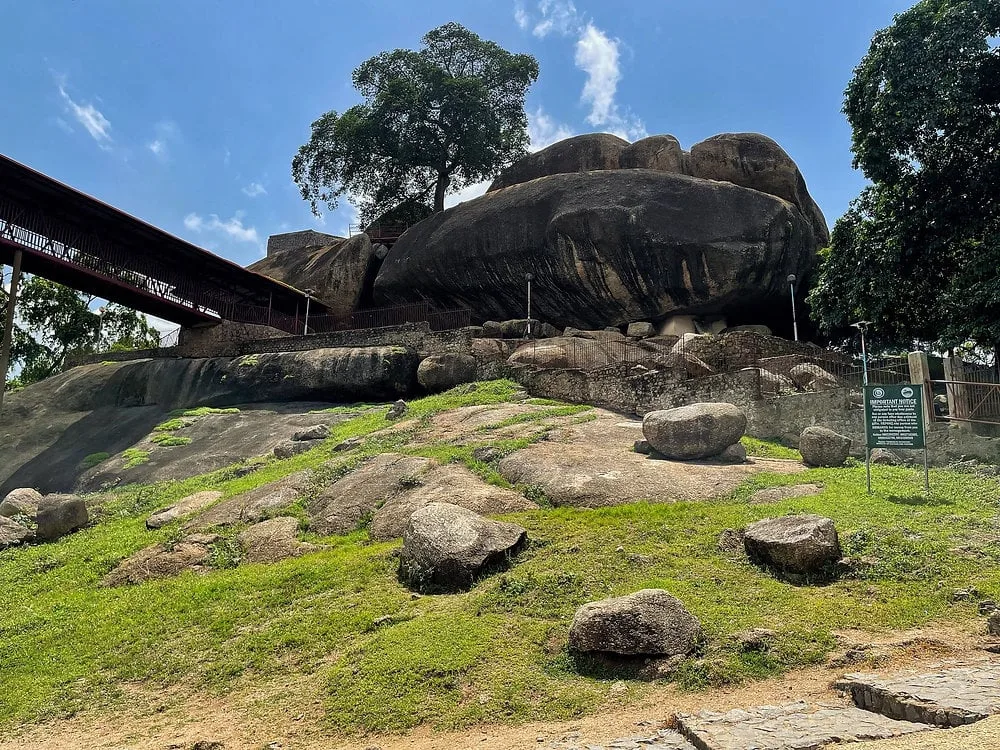
Abeokuta grew around this rock, which sheltered the Egba people in the nineteenth century. Visitors can climb with a guide, see caves and shrines, and look out over the city. It is an easy day trip from Lagos.
Badagry and Lekki (Lagos State)
Badagry has museums and sites connected to the history of the transatlantic slave trade, including the route known as the Point of No Return. Closer to the city, the Lekki Conservation Centre offers a long canopy walkway through coastal forest and a chance to see monkeys and birds.
South-East: Caves, Lakes and Hills
Ogbunike Caves (Anambra State)
A network of passages and chambers with a stream running through, long associated with Igbo spiritual traditions. Visits involve steps down and slippery rock, so wear closed shoes and use the site guides.
📰 Similar Posts
Nike Lake Resort (Enugu State)
A lakeside resort on the edge of Enugu with accommodation, conference facilities and a restaurant. It works as a quiet base for exploring Enugu’s hills and nearby heritage sites, and is popular for weekend breaks and events.
South-South: Coast and Carnival
Oron Museum (Akwa Ibom State)
The museum is known for its carved wooden ancestral figures made by the Oron people. It is a short, focused visit that works well alongside a coastal stop in Akwa Ibom State.
Calabar and Cross River
Calabar is the base for the annual carnival in December, as well as museums and heritage sites in the city. Cross River State also has forests and highland areas, including the Obudu Plateau, which has a cooler climate than the lowlands.
North: Heritage, Festivals and Wildlife
Kano Durbar and the old city (Kano State)
The Durbar is a procession of horsemen and people on foot held at the Eid el-Fitr and Eid el-Kabir celebrations. UNESCO added it to the Representative List of the Intangible Cultural Heritage of Humanity in December 2024. Kano’s old city walls and markets are on the tentative list and are worth a separate day.
Argungu Fishing Festival (Kebbi State)
An annual cultural event centred on a mass fishing competition on the Matan Fada river, with performances, drumming and displays. Dates depend on the state organisers, so confirm them with the Kebbi State tourism office before you plan.
Sukur Cultural Landscape (Adamawa State)
A hilltop settlement with a palace, terraced farmland and iron-working traditions, listed as a World Heritage Site in 1999. It is remote, so travel advice and security conditions in the area should be checked before every visit.
Yankari Game Reserve (Bauchi State) and Zuma Rock
Yankari is one of Nigeria’s best-known wildlife areas, known for its warm springs and for elephants and other animals. Zuma Rock, a large monolith beside the road from Abuja towards Suleja, is a quick stop for photographs and is sometimes called the gateway to Abuja.
Well-Known Versus Under-Visited
| Better known | Quieter alternative | Why try it |
|---|---|---|
| Lekki and Tarkwa Bay beaches | Coastal stops in Akwa Ibom and Cross River | Fewer crowds, local food |
| Zuma Rock | Idanre Hill | A real climb with history |
| Obudu Plateau | Ogbunike Caves | A different landscape and cultural story |
| Lagos museums | Oron Museum | A focused collection of carved ancestral figures |
Worked Example: A Seven-Day South-West Route
| Day | Plan (hypothetical) |
|---|---|
| 1 | Arrive in Lagos; Lekki Conservation Centre |
| 2 | Badagry heritage sites |
| 3 | Drive to Abeokuta; climb Olumo Rock |
| 4 | Travel to Osogbo; evening rest |
| 5 | Osun-Osogbo Sacred Grove with a guide |
| 6 | Idanre Hill climb in the morning |
| 7 | Return to Lagos or Akure for the flight home |
Plan long road days around daylight and traffic, and confirm road conditions before you set off.
Planning Tips
- Check security and travel advice for every state on your route, especially in the north-east, and adjust if conditions change.
- Use local guides. They add history, handle access and support the community.
- Travel in the dry season, roughly November to March, when roads and trails are easier. Harmattan haze can reduce views.
- Carry cash and a card. Rural sites often take cash only.
- Respect sacred places. Ask before photographing shrines or people, and follow dress guidance.
- Book festival travel early. Accommodation fills fast near Calabar, Kano and Osogbo at festival times.
For Visitors From Abroad
Foreign nationals who need a visa can apply for a Nigerian e-visa through the official portal of the Nigeria Immigration Service. Rules, fees and permitted stays are set by the Service, so check its website before you pay.
Frequently Asked Questions
Which Nigerian sites are UNESCO World Heritage Sites?
Two: the Sukur Cultural Landscape (1999) and the Osun-Osogbo Sacred Grove (2005).
Is the Kano Durbar a World Heritage Site?
No. It is on UNESCO’s list of intangible cultural heritage, which covers traditions and events, not places.
What is the best time to visit?
The dry season from about November to March suits most trips. Pick festival dates if you want to see a specific event.
Can I do these trips without a car?
Some, using domestic flights and hired drivers. Many rural sites are easiest with a driver who knows the roads.
Are the sites suitable for children?
Many are, such as Lekki, Olumo Rock and Yankari. Climbs like Idanre and cave visits like Ogbunike suit older children.
👀 You Missed
You Might Also Like




About the Author

No responses yet