
IDP Education Emerging Futures Research 2026 on International Student Recruitment Trends
Brief Description
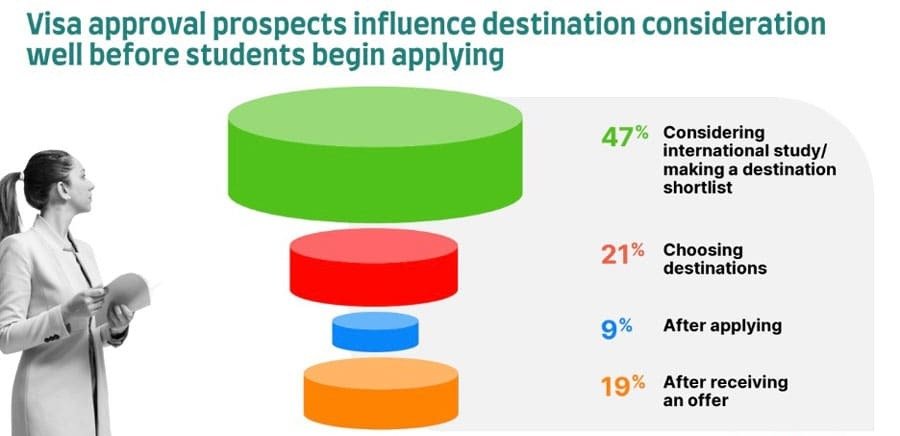
New research from IDP Education reveals that global competition for international students is intensifying as prospective scholars weigh changing visa policies, approval prospects, and artificial intelligence against their study destination choices. The Emerging Futures research, drawing responses from 4,800 students across 106 countries between 18 August and 16 September 2026, highlights a notable decline in Australia’s preference lead amid stricter regulatory changes and fee hikes. With postgraduate students making up 60% of respondents and undergraduates comprising 28%, the study provides critical insight into international student recruitment and evolving study abroad trends 2026.Name of Host Institution
IDP Education (Reporting via ICEF Monitor)Global study preferences are experiencing a sharp realignment. According to the data, Australia’s lead as students’ first-choice destination fell from 31% to 24% in a span of less than six months between May 2026 and October 2026. While Australia held a 12-percentage-point lead over the UK and 17 points over the US and Canada in May, that advantage narrowed significantly by October, leaving Australia just 3 percentage points ahead of the UK and the US.
Several regulatory pressures are driving this shift. The July 2026 hike of the study visa application fee, the classification of six of the top ten Australian educator markets as “high-risk,” and the removal of undergraduate and master’s students’ ability to bring family members have all impacted prospective applicant volume. Furthermore, current students face the requirement of leaving the country to apply for another visa, alongside heated political debates such as the One Nation party’s proposal to abolish the Temporary Graduate Visa for most students.
📌 Read More
Individual experiences highlight the human cost of these rapid policy pivots. Wina Satria, an Indonesian PhD candidate studying at the University of Sydney who arrived in Australia in 2025 with her toddler, anticipated her husband joining them to assist with childcare, an arrangement permitted at the time of her enrollment. However, rules enacted on 2 October 2026 blocked even current PhD students holding visas from adding family members. Speaking to The Guardian, Ms Satria noted the emotional toll on her family separation.
At the same time, industry experts point to a broader environment where technology intersects with student decision-making. The survey revealed that a third of students are actively factoring AI’s potential impact on future jobs into their choice of study program. While measures addressing fraudulent applications and dishonest agents receive support from education professionals like Mukesh Dhamala, who works with an Australian institution in Nepal, frequent unexpected policy shifts continue to test the resilience of students and institutions alike.
You Might Also Like

About the Author

No responses yet