
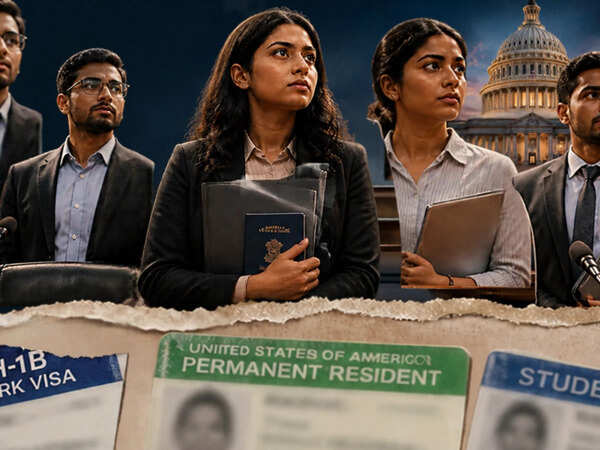
US Midterm Elections 2026: Who Really Controls Your US Visa?
Americans head to the polls on November 3, 2026, to elect members of the House of Representatives and the Senate, and the outcome will ripple straight into the lives of thousands of Indians hoping to study, work, or settle in the United States.
If you’re waiting on an H-1B approval or stuck in the endless green card queue, it’s easy to look at the ballot box and expect an instant fix. But the reality of US immigration policy is a tug-of-war between two branches of government that play entirely different roles.
📌 Read More
While the US Congress holds the pen on immigration law, the President and his administration hold the keys to how those laws are actually run day-to-day. That distinction matters immensely for shaping the immigration debate during the remaining two years of Donald Trump’s presidency.
Take the H-1B visa programme, which remains a lifeline for Indian tech professionals heading to the US. Congress has the explicit authority to rewrite the rules governing the programme, from changing annual limits to altering eligibility frameworks for applicants and their employers.
Right now, that statutory framework sits at an annual cap of 65,000 regular H-1B visas. An additional 20,000 places are carved out for applicants who hold advanced degrees from US institutions. If a newly empowered Congress wants to shift those numbers, it has to pass legislation through both chambers and get the President’s signature.
Yet, the executive branch doesn’t just sit back. The Department of Homeland Security and US Citizenship and Immigration Services hold substantial sway over how the program is administered on the ground. That means even a massive shift in the balance of power in Washington won’t automatically rewrite your H-1B application checklist overnight. The agencies executing the rules retain significant administrative control over application and compliance requirements.
The same split power dynamic defines the employment-based green card backlog, which has trapped many Indian applicants in waiting periods lasting years or even decades. The system is hemmed in by strict annual limits alongside a strict seven per cent per-country ceiling. Those two statutory guardrails are precisely what created the colossal backlog for Indian nationals in the first place.
📰 Similar Posts
Can the midterm results change that? Only if Congress passes sweeping legislative reform to amend those caps or overhaul the per-country allocation system. A newly elected Congress creates a political opening for immigration reform debates, but it cannot snap its fingers and clear the backlog through election night victories alone.
Meanwhile, the administration handles the operational side, influencing how existing applications are processed and how visas are doled out within the hard limits set by law. International students face a similar division when it comes to rules governing how long they can stay in the country. While lawmakers can introduce bills affecting international education frameworks, the executive branch heavily influences the regulatory environment through shifting immigration enforcement priorities and agency oversight.
For international students and professionals alike, understanding where legislative authority ends and executive execution begins is the only way to read election results without false hope. The ballot box can change the laws of the land, but the agencies carrying out those laws still dictate how your paperwork moves through the system.
👀 You Missed


About the Author

No responses yet